
What you need to know
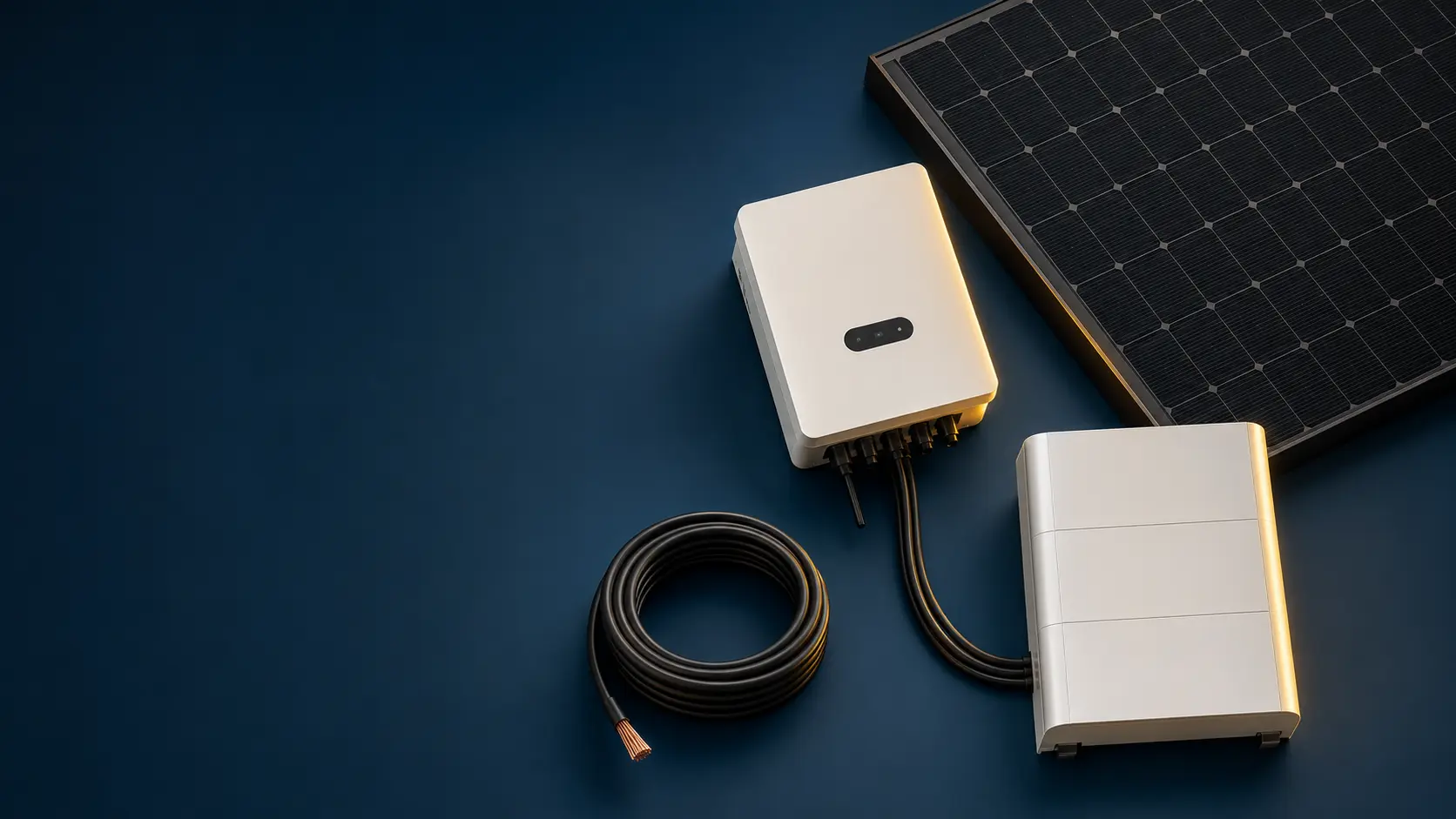
A complete home solar system needs modules to generate DC electricity, an inverter to convert and control it, solar-rated DC cable and connectors to carry it safely, protection and metering, plus an optional compatible battery for energy shifting or backup. Brand names help, but model compatibility, engineering and workmanship determine whether the system performs as one unit.
Key takeaways
- Panels determine generation potential; the inverter controls conversion, monitoring and battery functions.
- Cable is a long-life safety component exposed to heat, UV, moisture and electrical stress.
- A 5.12 kWh battery rating is energy capacity—not guaranteed whole-home runtime.
- The final quotation should list exact models, warranties and installation locations.
01
Astronergy panels: the energy-producing surface
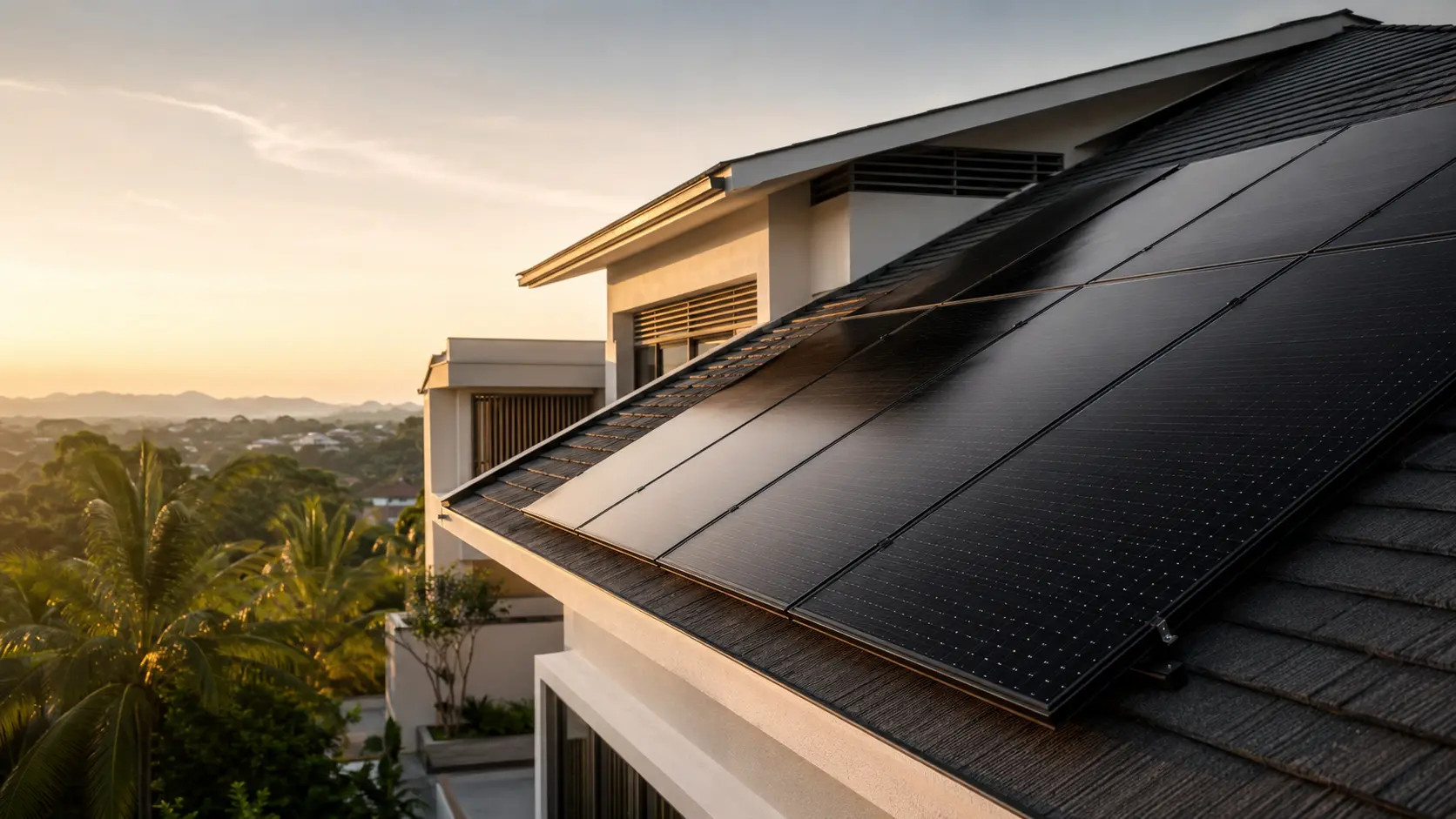
Hornbill’s named residential specification uses Astronergy ASTRO N7s all-black modules. Astronergy is a BloombergNEF Tier 1 PV module manufacturer, while the N7s family is positioned for residential use with n-type TOPCon technology and a compact, high-efficiency format.
The panel selection should be checked against roof dimensions, string design, inverter current limits, structural loading and the desired appearance.
02
GoodWe inverter: the control centre
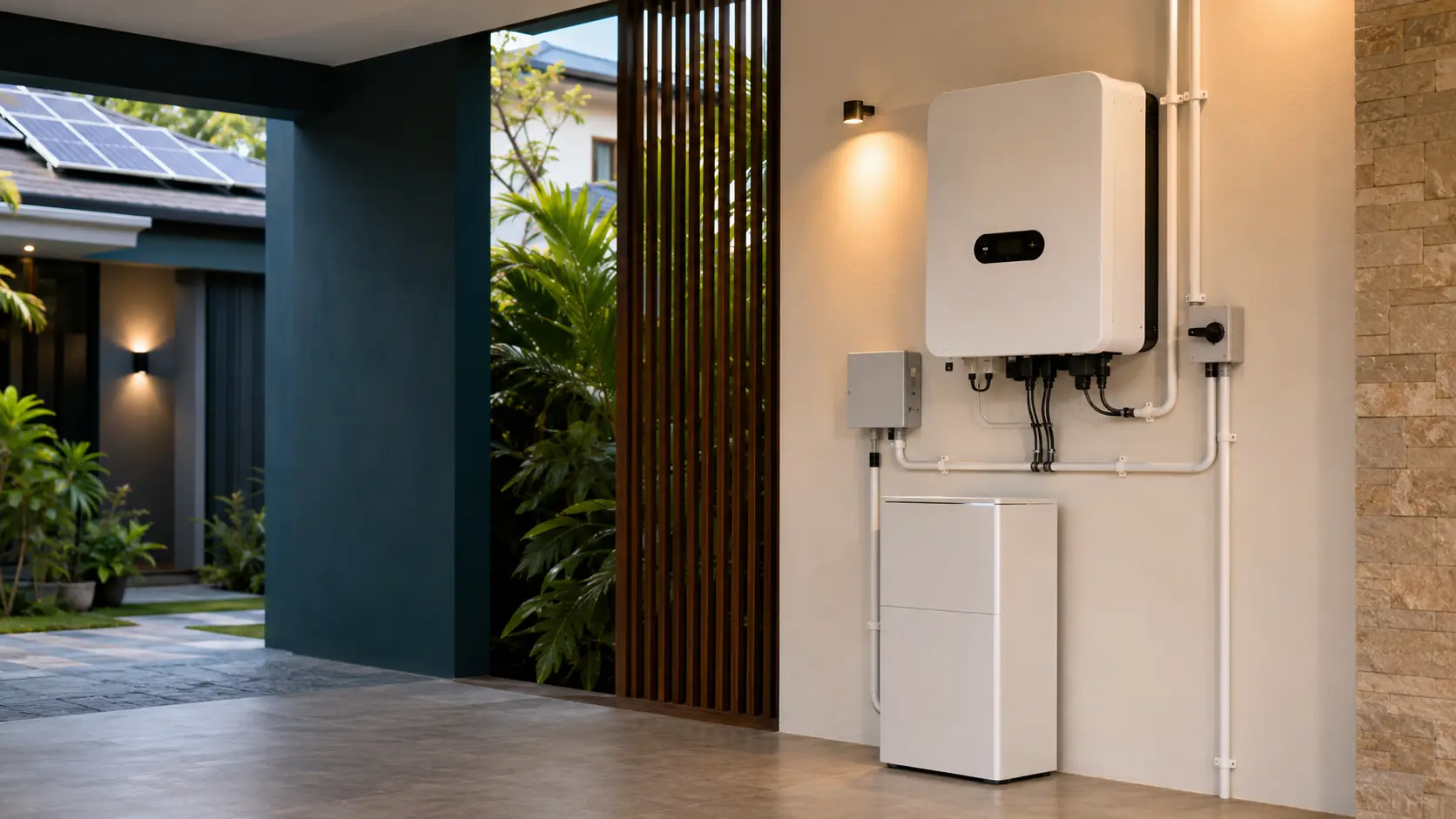
The GoodWe ET PLUS+ converts solar DC to usable AC and can integrate a compatible high-voltage battery. Monitoring, export control, battery priority and supported backup functions all sit around the inverter platform.
Correct AC sizing and DC oversizing require engineering. A higher panel total than inverter rating can be legitimate within manufacturer limits, but it must be modelled and documented rather than guessed.
03
JJ-LAPP cable: the component people rarely see
Solar DC cable may operate outdoors for decades. The specified H1Z2Z2-K solar cable type is associated with EN 50618 requirements, including characteristics relevant to UV, weather, ozone, flame and mechanical exposure.
Cable quality cannot compensate for poor installation. Routing, support, bend radius, connector crimping, segregation, labelling and protection against sharp edges are equally important.
04
BYD 5.12 kWh battery: storage with defined limits
Hornbill’s named optional package uses a BYD 5.12 kWh, IP20 battery specification. IP20 equipment requires the protected installation environment defined by the manufacturer and final design; it should not be treated as weatherproof outdoor equipment.
Battery energy, inverter power and backup load are different measurements. A battery may store 5.12 kWh, but usable energy, losses and discharge limits determine actual runtime. Compatibility must be confirmed for the exact battery model and inverter firmware.
05
The overlooked items that complete the system
Mounting, isolators, surge protection, earthing, breakers, labels, meters, monitoring and documentation are not optional details. They turn a collection of products into an operable electrical system.
Ask for a single-line diagram, layout, model schedule, warranties, monitoring login and handover pack. Those documents make future service faster and protect the homeowner if staff or suppliers change.
Straight answers
Frequently asked questions
What are the four main home solar components?+
Solar panels, inverter, solar-rated cable and protection, with an optional compatible battery. Metering, mounting, monitoring and electrical protection complete the system.
Why does solar cable quality matter?+
DC cable carries energy every day under heat, UV, moisture and electrical stress. The correct certified cable and professional installation reduce long-term failure and safety risk.
Is a 5.12 kWh battery enough for a whole house?+
Not automatically. Runtime depends on usable energy and connected load, while peak appliance power must stay within inverter and battery limits.
Can any battery connect to any hybrid inverter?+
No. Electrical voltage, communications, firmware and the manufacturer compatibility list must match. Confirm the exact models before purchase.
Official and primary sources
Policy and product information can change. These were reviewed on 19 July 2026; confirm current eligibility and specifications before making a purchase decision.